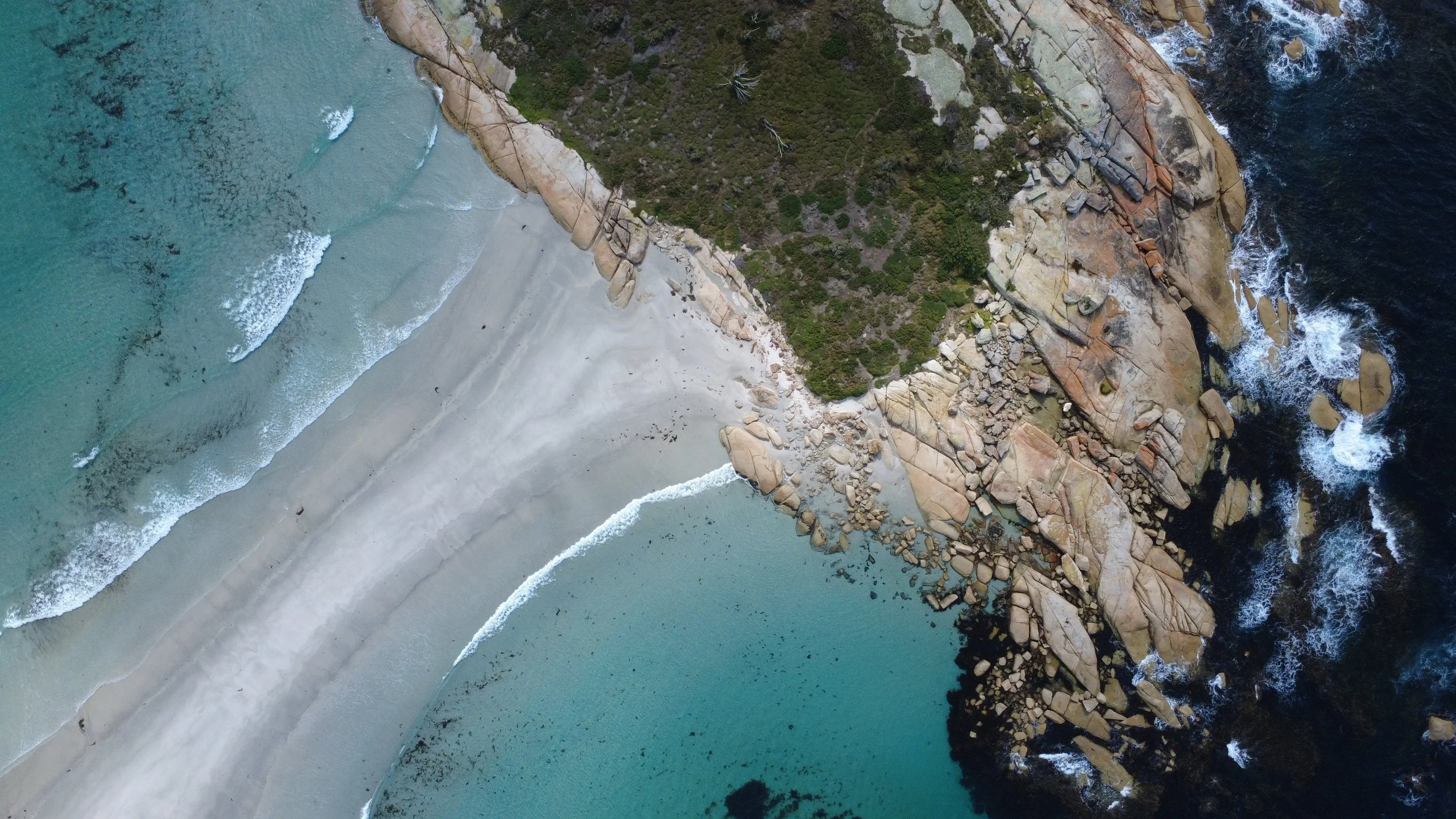
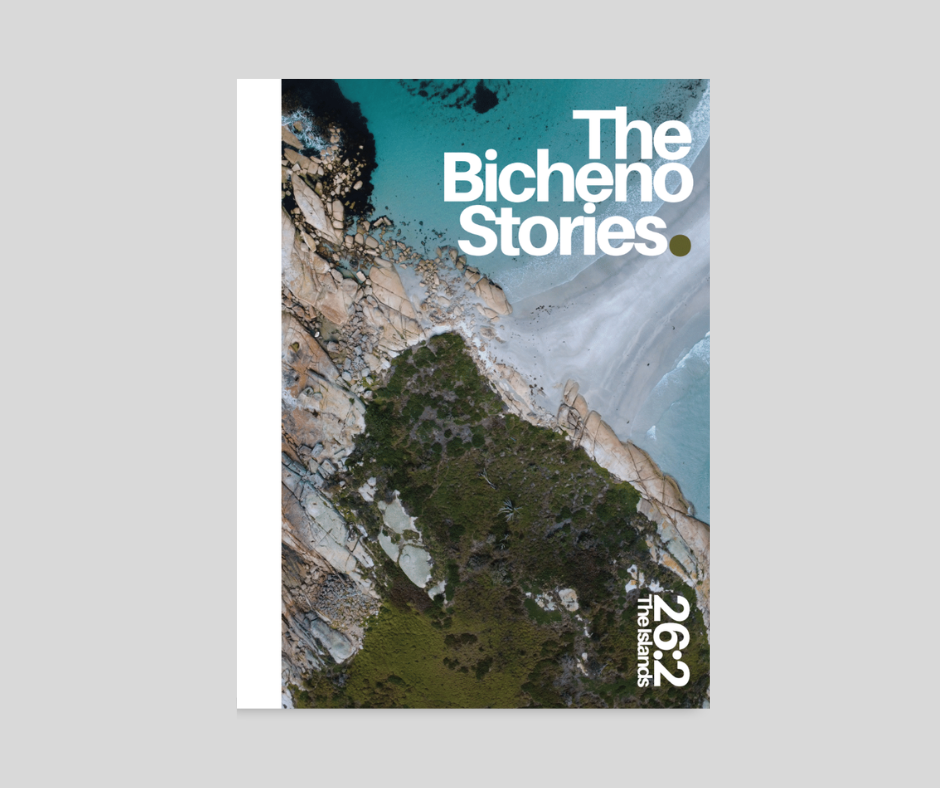
Current issue: 26.2 The Islands
This edition (104-pages) begins beyond the shoreline.
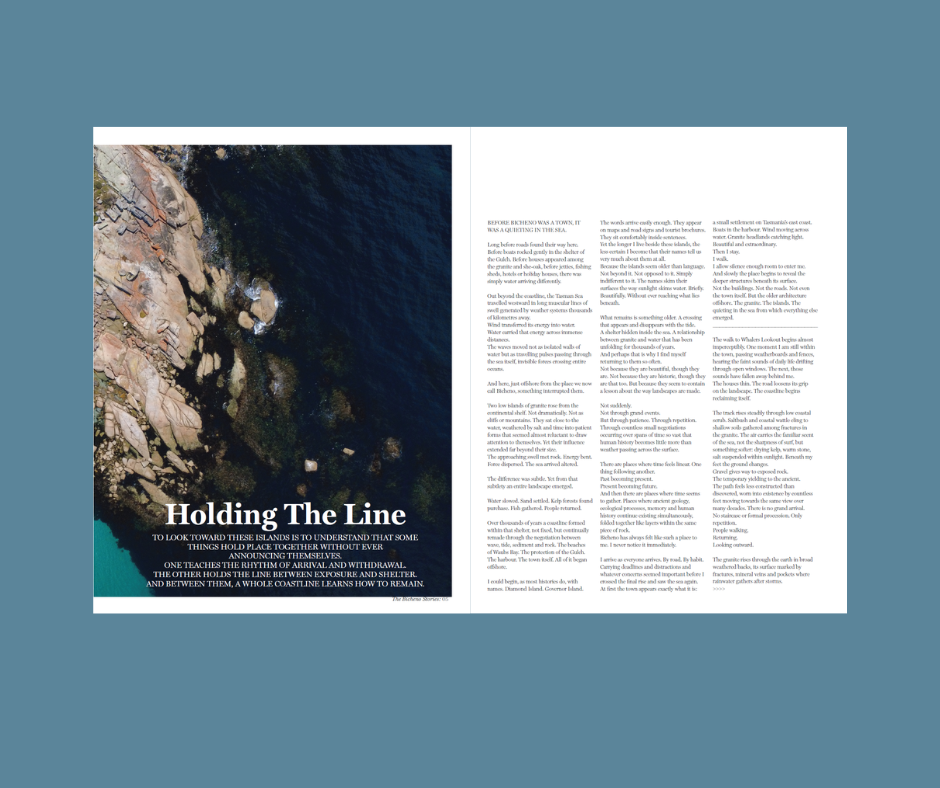
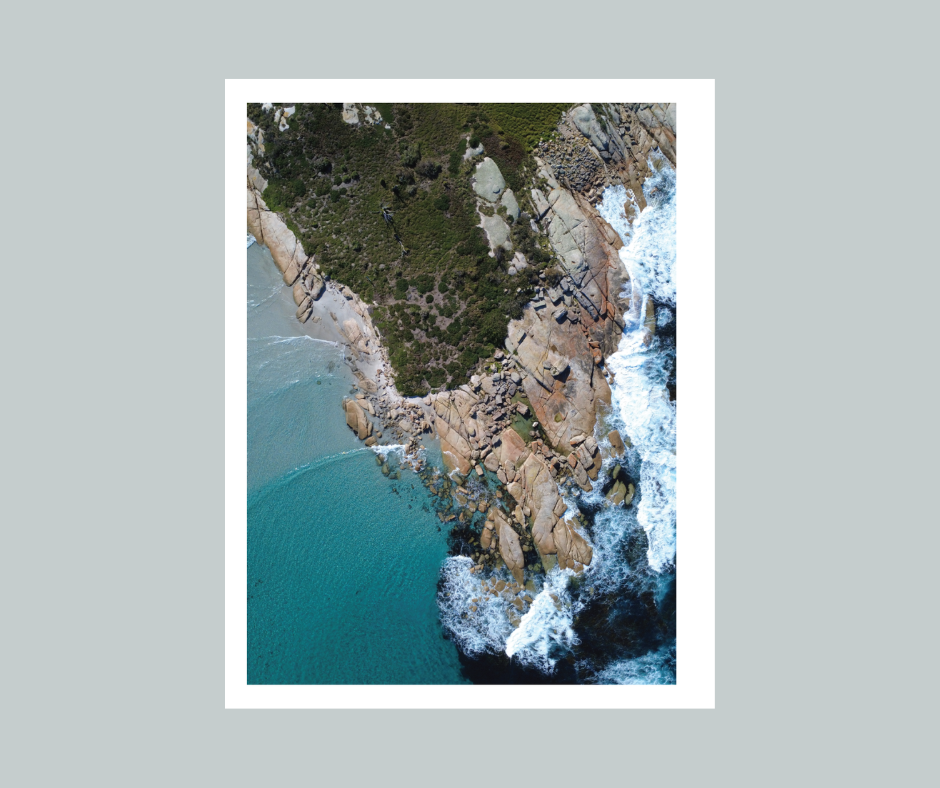
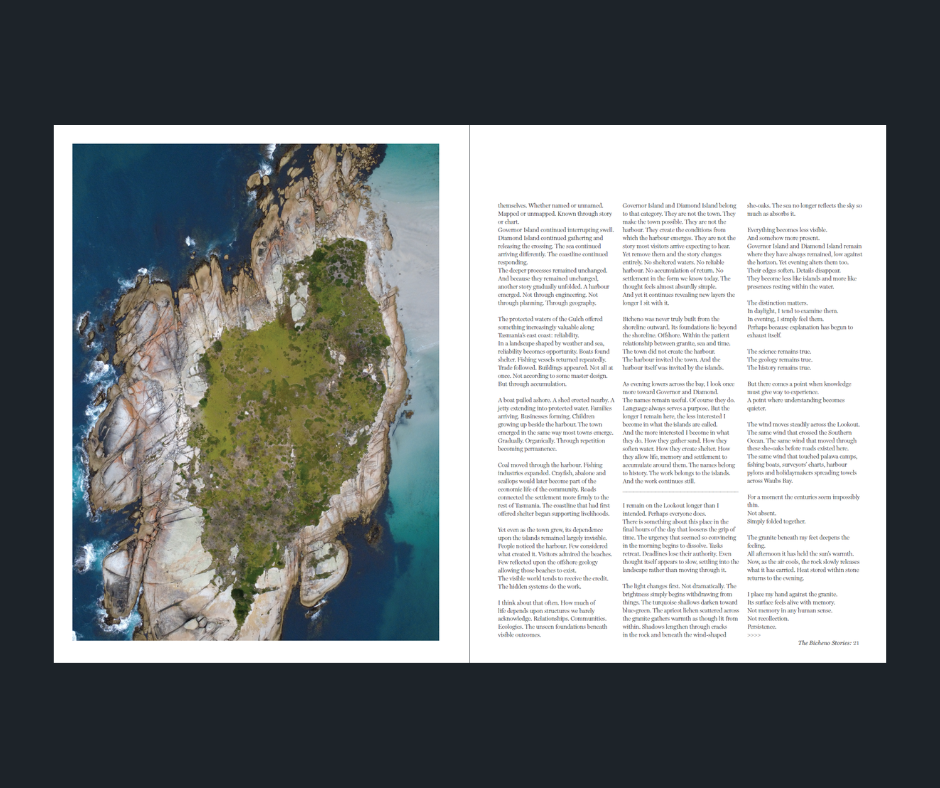
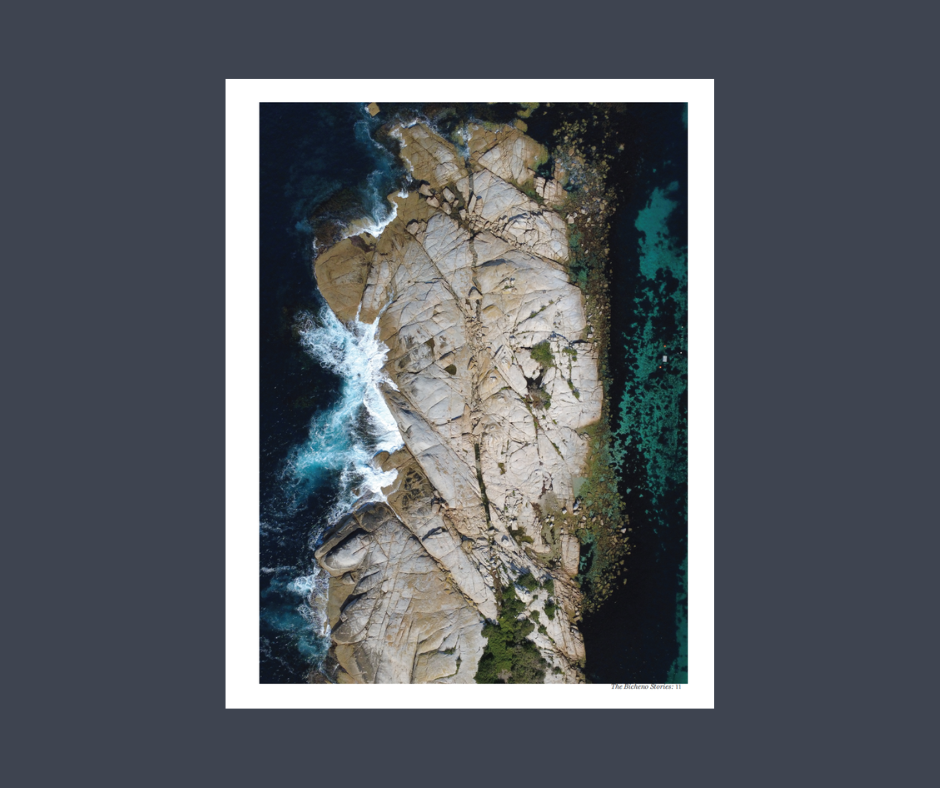
Out where the sea gathers itself after crossing thousands of kilometres of open ocean. Out where two low islands of granite sit against the horizon, so familiar they are often overlooked, yet so fundamental that without them there may never have been a harbour here at all.
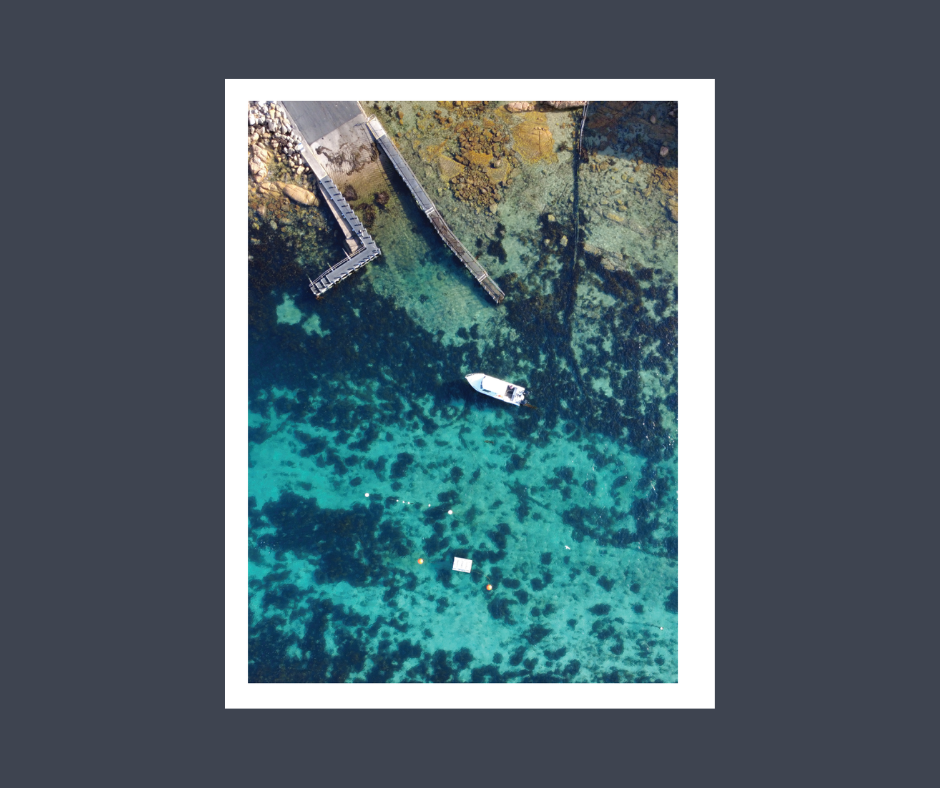
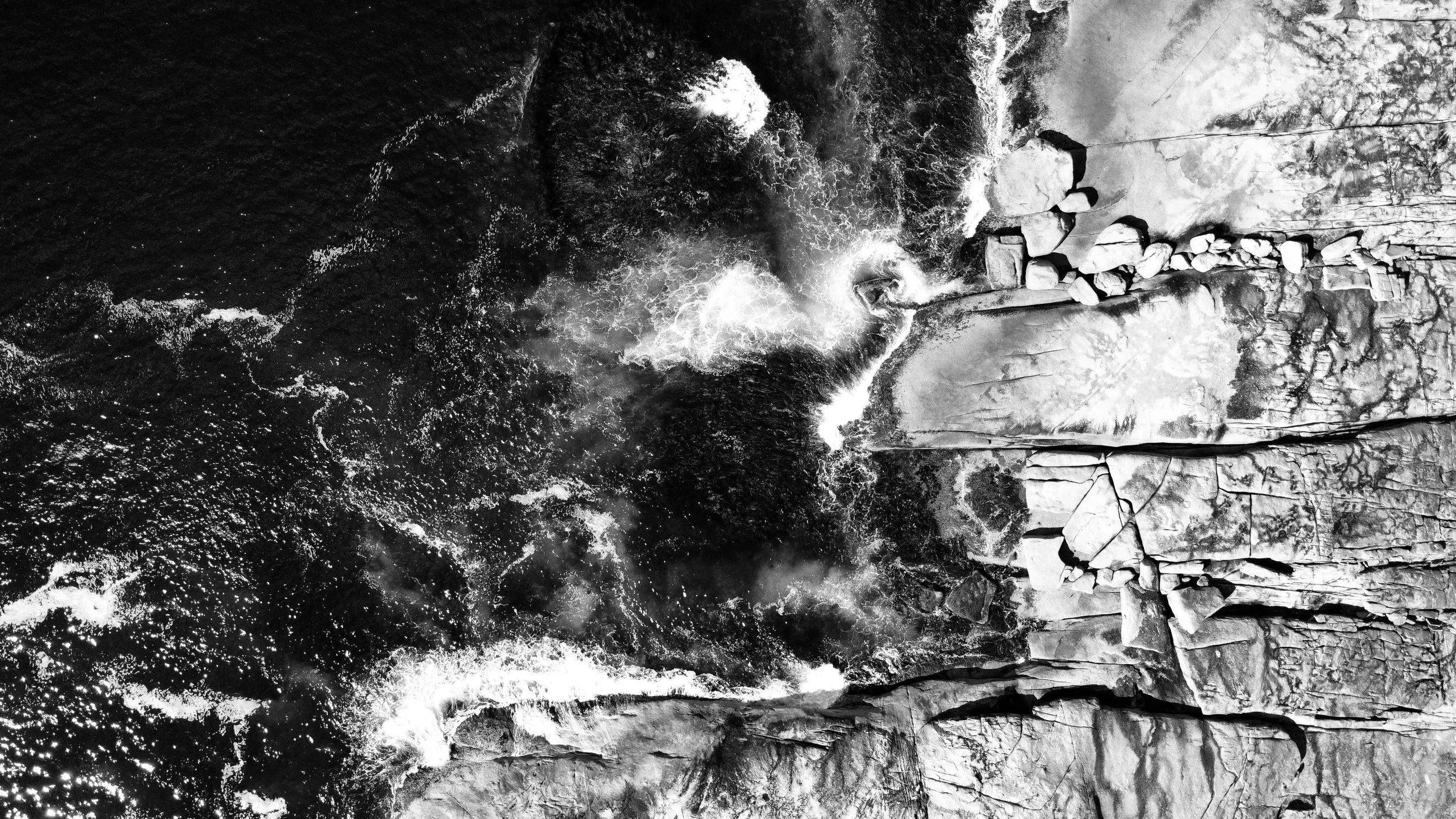
For thousands upon thousands of years, Governor Island and Diamond Island have been quietly remaking the water around them. They have bent the swell, gathered the sand, softened the force of the Tasman and, in doing so, created the sheltered waters that allowed people to arrive, remain and return. Long before roads and jetties. Long before fishing boats and holiday shacks. Long before Bicheno became Bicheno.
Beginning at Whalers Lookout, high above the harbour, we follow this story outward. Through geology and oceanography. Through Palawa knowledge and deep time. Through the names later given to these islands and the lives that unfolded in their shadow. What emerges is a landscape that is far more than scenery. A landscape that acts upon the world around it. A landscape still shaping the town beneath it.
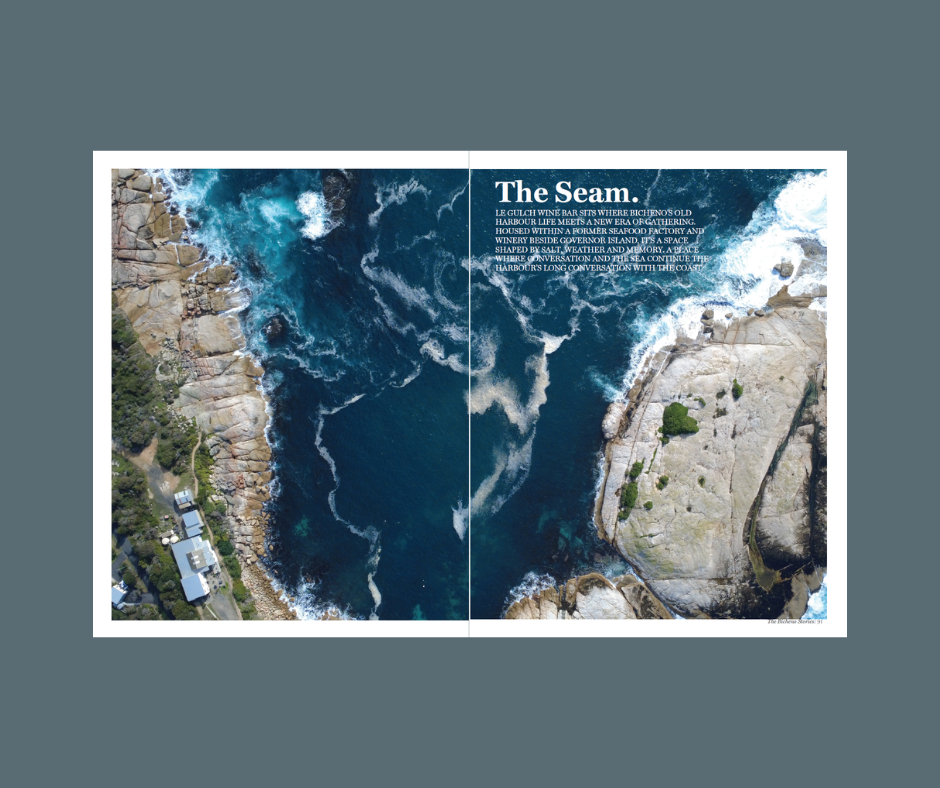
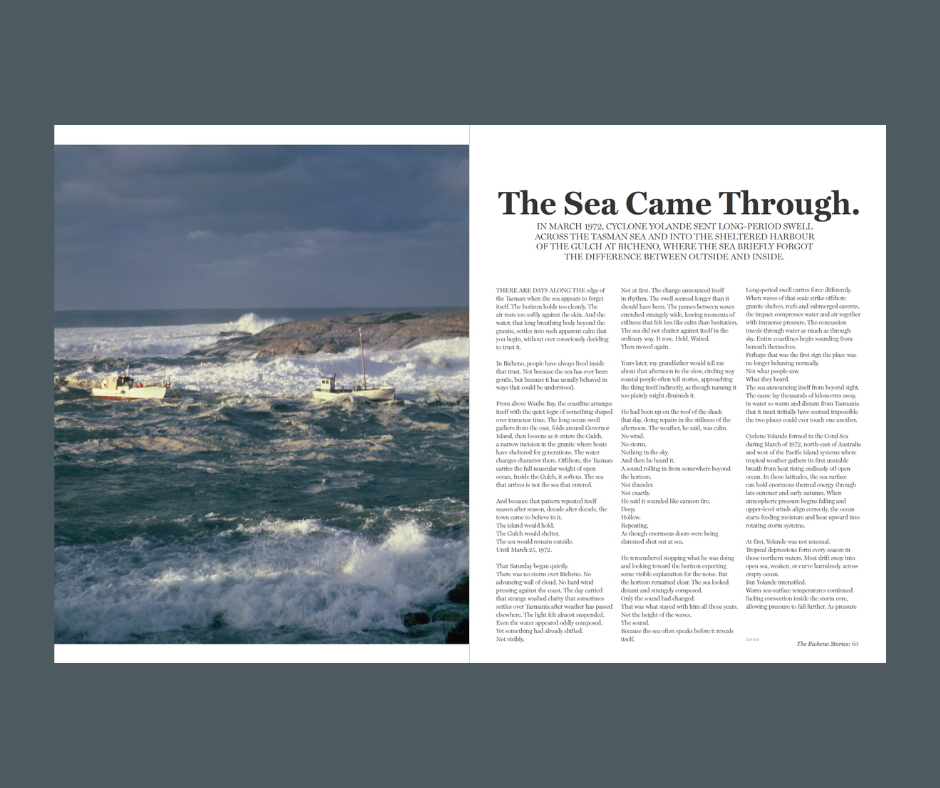
Elsewhere, the sea reveals another face. Cyclone Yolande arrives with a violence that briefly overwhelms the harbour's ancient shelter. At Le Gulch, a building beside the water continues its long conversation with the coast, carrying memories of fishing, winemaking and gathering.
And in Governor, we step into a quieter tide. A widowed fisherman, his daughter, and a house carrying the absence of someone deeply loved. Set beneath the enduring presence of Governor Island, the story explores grief not as an event but as a landscape of its own, something weathered day by day, season by season, much as the granite coast itself weathers wind and sea. It is a story of loss, certainly, but also of endurance, and of the small acts of love by which people continue carrying one another forward.
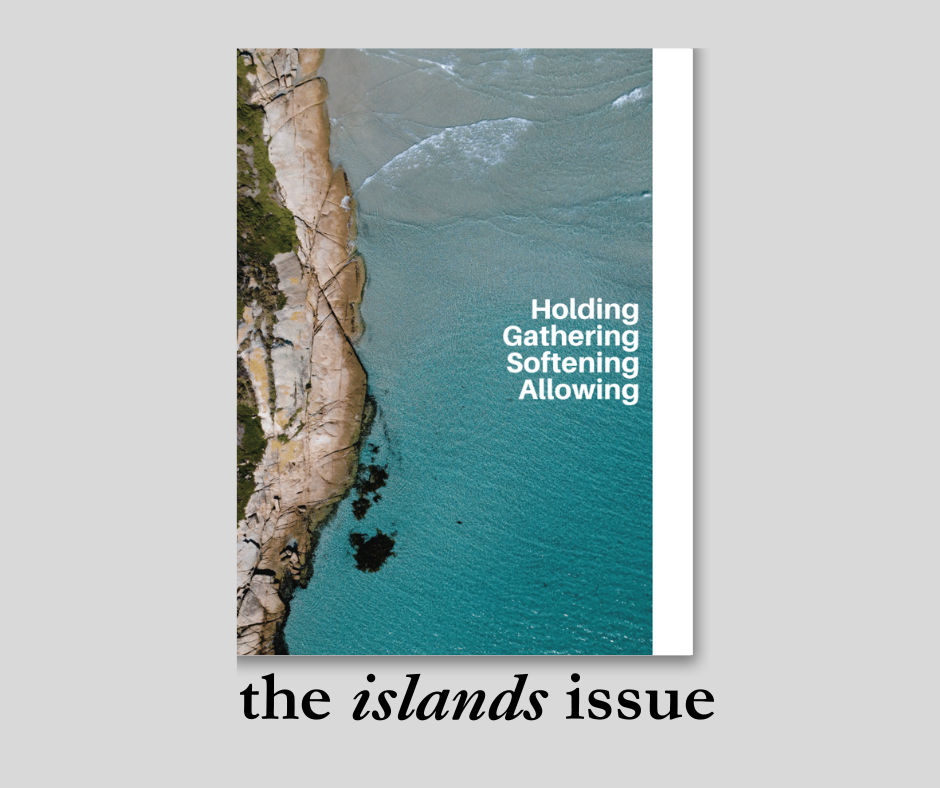
Together, these stories return again and again to the same truth: that some places do not merely witness history. They create the conditions for it. Beyond the harbour, beyond the town, the islands remain where they have always been. Holding the line. Gathering the sand. Bending the swell. Quietly continuing their ancient work while life unfolds beneath their watch.

Vivid.
Evocative. Independent.
The Bicheno Stories
Where place remembers.
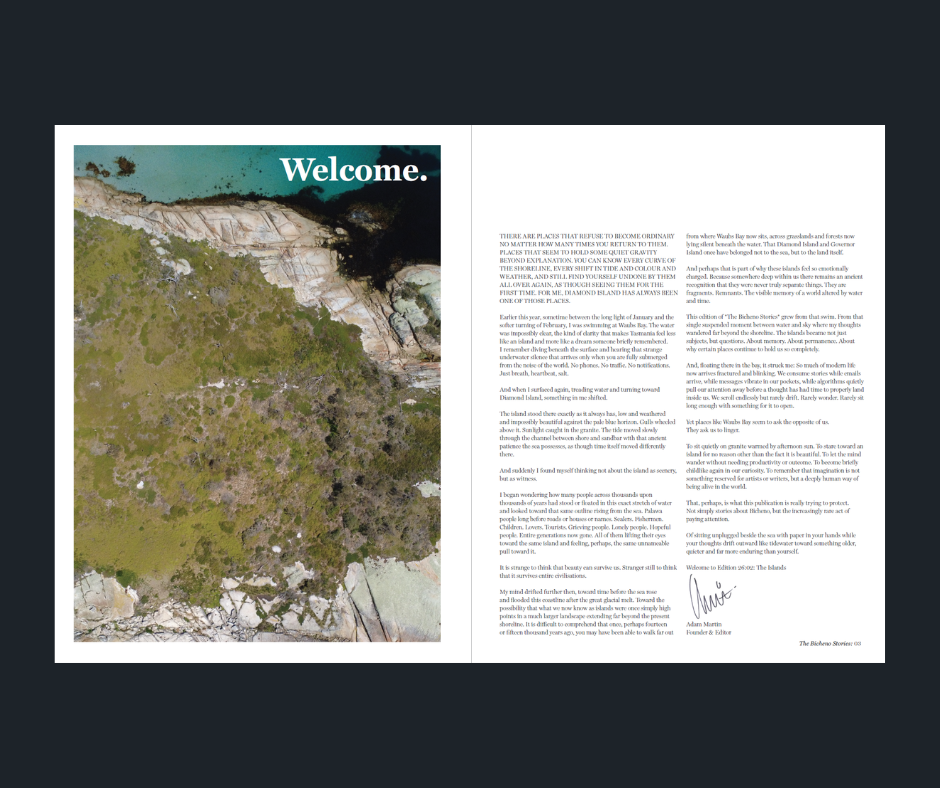
Edition 26:01 + 26:02 of The Bicheno Stories, a printed magazine devoted entirely to Bicheno, is now available online and instore.
The Bicheno Stories is an independent print publication devoted to one coastal town, its remembered past, its living present, and the futures taking shape beneath both.
We publish slow-made editions, closer to books than magazines (a love letter), created to be kept and returned to. Within them are stories carried forward: voices inherited, silences observed, moments gathered before they disappear. Between stories, we share fragments, photographs, essays, and reflections shaped by season, tide, and time.
Bicheno is a place built from memory: from hands that worked the water and land, from summers that never quite leave the body, from losses that changed the way people stayed. But it is also a place still becoming, where new lives arrive, old questions resurface, and the future quietly presses its weight against the past.
These pages hold what has been, while making room for what comes next.
This is how a town remembers itself.
This is how it endures.

Letters from Bicheno
A few times each year, a letter is written from Bicheno and sent quietly by email.
This year’s letters are exchanged between two lovers separated by war.
They arrive without schedule, shaped by place, distance, and what cannot be said.